


11 May How to Blend Coastal and Traditional Style in a Charleston Home
How to Blend Coastal and Traditional Style in a Charleston Home
Blending coastal and traditional style in a Charleston home is about creating balance. The most successful interiors feel rooted in architecture and history, softened by natural materials, coastal light, and a more relaxed sense of livability.
Charleston interior design often sits at the intersection of two influences. On one side, there is traditional character: original millwork, formal proportions, antiques, and architectural detail. On the other, there is coastal softness: lighter palettes, natural texture, airy rooms, and a more relaxed rhythm. The challenge is not choosing between them. It is knowing how to let both influences work together without making the home feel too formal or too themed.
At Bella Coze Home, we believe Charleston interiors are at their best when they feel layered, timeless, and genuinely livable. Through our interior decorating services, we help homeowners create spaces that respect the home’s character while still feeling warm, inviting, and easy to live in.
Start With the Architecture, Not the Decor
In a Charleston home, the architecture should guide the interior. Ceiling height, trim, windows, fireplaces, flooring, and room proportions all influence what the home can carry well. Traditional architecture brings weight and structure, while coastal influence can soften that framework without competing with it.
The goal is not to decorate the room into a style. It is to let the architecture set the tone, then bring in furnishings and finishes that make the space feel lighter, more layered, and more welcoming.
Keep the Traditional Bones, Soften the Mood
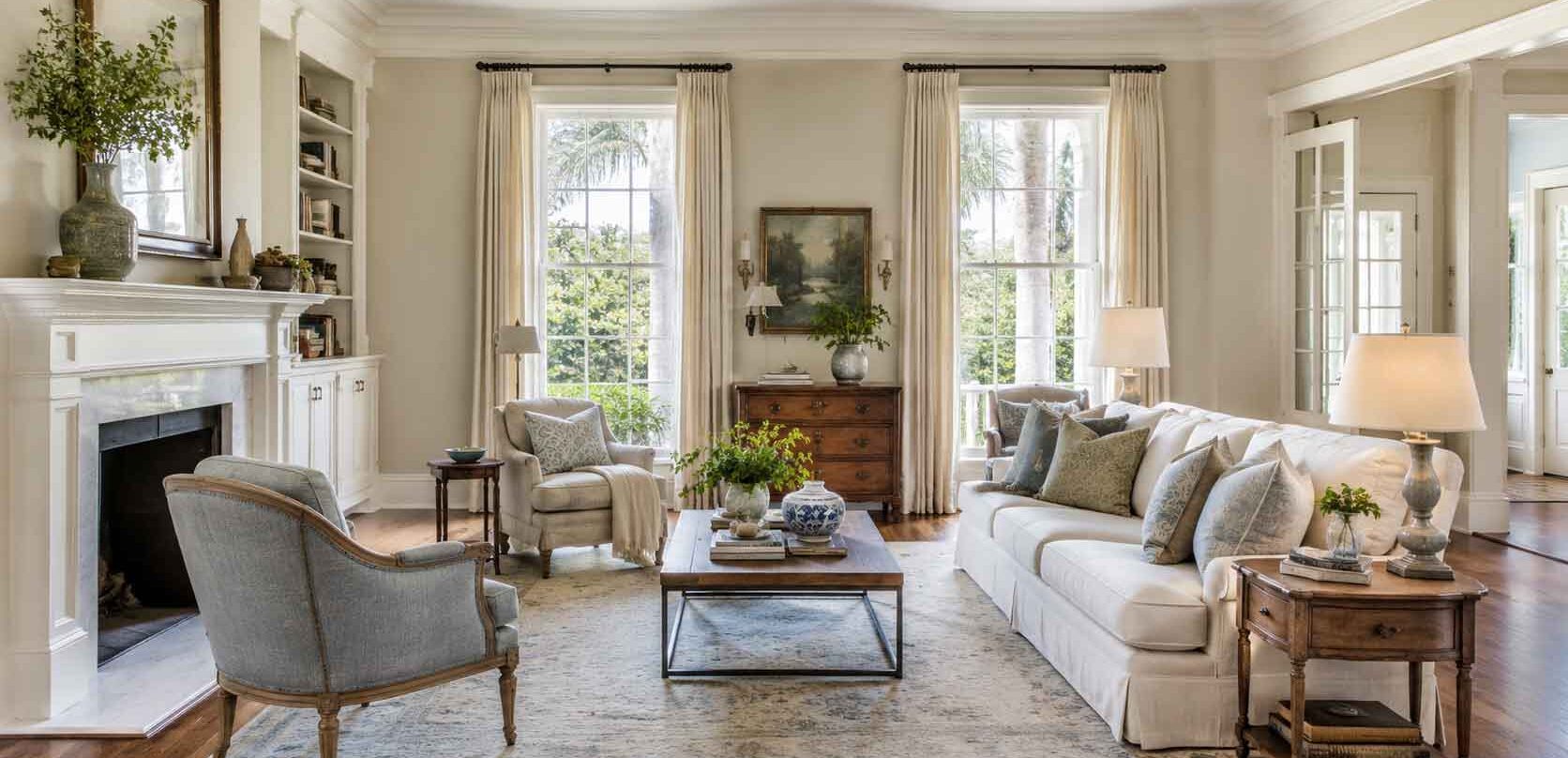
One of the easiest ways to blend these two styles successfully is to preserve the traditional elements of the home while making the overall atmosphere feel less formal. That usually means keeping millwork, classic details, and more tailored furniture silhouettes, then softening the room through palette, texture, upholstery, and lighting.
Traditional style brings structure. Coastal style brings ease. When those qualities are balanced well, the home feels elegant without feeling stiff.
Use a Palette That Feels Layered and Light
Color is one of the strongest tools for bridging coastal and traditional design. Charleston homes often respond beautifully to warm whites, sandy neutrals, muted blues, soft greens, weathered wood tones, and gentle contrast. These colors help lighten traditional rooms without stripping away their depth.
A palette that is too dark can make the home feel heavy. A palette that is too pale or flat can make it feel unfinished. The sweet spot is a layered palette with softness, warmth, and enough variation to feel intentional.
Mix Tailored Furniture With Relaxed Materials
Furniture is where this blend becomes most visible. Charleston interiors often benefit from more classic, tailored shapes, but those shapes feel better when they are upholstered in softer fabrics and paired with more natural materials.
Think structured seating in linen rather than heavier formal fabrics. Think antique wood pieces next to woven textures, plaster lighting, softer rugs, and more relaxed accent materials. The combination makes the room feel grounded and polished without reading overly formal.
Let Natural Texture Do the Work
Coastal style often enters the room most successfully through texture rather than theme. Linen, rattan, light wood, stone, plaster, seagrass, cotton, and other natural materials can soften a traditional interior without making it feel beachy.
This is usually a more refined approach than relying on overt coastal decor. It keeps the connection to place subtle and lets the home feel more sophisticated and timeless.
Use Antiques and Collected Pieces With Restraint
Charleston homes often look their best when they feel collected. Antiques, vintage lighting, artwork, and inherited pieces can add warmth and authenticity, especially in homes with historic character. But they do not need to dominate every room.
A few meaningful older pieces mixed with cleaner upholstery and softer materials usually create a stronger result than filling the home with too many heavy or highly traditional furnishings. The room should feel evolved, not overly styled toward one era.
Avoid Coastal Theme and Over-Formal Traditionalism
The blend breaks down when either side becomes too literal. Too much traditional influence can make the home feel rigid or dated. Too much coastal influence can make it feel generic or overly beach-driven.
Try to avoid:
- overly formal furniture arranged more for appearance than comfort
- obvious beach-themed accessories or decor motifs
- rooms that feel too matched or too heavy
- palettes that are either overly dark or too starkly white
- finishes that feel disconnected from the home’s age or architecture
The strongest rooms feel balanced. They acknowledge both the architecture and the setting without leaning too far into either extreme.
Design for Hospitality and Real Life
Charleston homes should feel beautiful, but they should also feel welcoming. That is one of the clearest connections between traditional Southern interiors and more relaxed coastal homes. Both should support gathering, comfort, and a sense of ease.
Comfortable seating, practical layouts, layered bedrooms, warm lighting, and well-scaled dining areas all help the home feel lived in rather than staged. If you want to see how Charleston interiors differ more broadly, read our guide on what makes Charleston interior design different.
Why This Blend Works So Well in Charleston
Charleston naturally supports this mix because the city itself holds both influences at once. There is history, formality, craftsmanship, and architectural detail, but there is also softness, light, and a coastal pace of life that calls for more ease.
This is also why Southern style interior design overlaps so naturally with Charleston homes. Both styles value hospitality, layered materials, classic details, and spaces that feel timeless rather than trend-driven.
When to Lean More Traditional or More Coastal
Every Charleston home needs a slightly different balance. A more historic property may need a stronger traditional foundation, with coastal influence brought in more quietly through color and texture. A newer home near the water may be able to lean lighter and more coastal while still borrowing traditional proportion and detail.
The right answer usually depends on the architecture, the location, and how you want the home to feel day to day. If you are looking for a more service-focused view, visit our Charleston interior design page.
Final Thoughts
Blending coastal and traditional style in a Charleston home works best when the interior feels layered, architectural, comfortable, and restrained. The goal is not to create contrast for its own sake. It is to create a home that feels rooted in Charleston’s character while still feeling light, livable, and personal.
When done well, the result is a home that feels timeless and welcoming at once—never too formal, never too themed, and always connected to the place it belongs.
Create a Charleston home that feels layered, livable, and beautifully balanced.
Bella Coze Home helps homeowners blend architectural character, coastal softness, and timeless comfort into interiors that feel personal and complete. Explore our interior decorating services or schedule a consultation to discuss your home.
Frequently Asked Questions
How do you blend coastal and traditional style in a Charleston home?
Start with the architecture, preserve traditional details, then soften the home through palette, texture, relaxed upholstery, and natural materials. The goal is balance rather than contrast.
Should Charleston homes feel more coastal or more traditional?
Usually both, in the right proportion. Most Charleston homes feel strongest when traditional architecture is softened by lighter materials, coastal palettes, and a more relaxed sense of comfort.
What colors work best for this style blend?
Warm whites, sandy neutrals, muted blues, soft greens, weathered woods, and layered natural tones usually work best because they support both historic character and coastal softness.
How do you keep a Charleston home from feeling too formal?
Use softer upholstery, more natural texture, warmer lighting, and practical layouts that support real life. Keep the architecture and classic details, but make the mood more relaxed and welcoming.
How do you keep a Charleston home from feeling too beachy?
Use coastal influence through materials, palette, and light rather than themed decor. A refined Charleston interior should feel connected to the coast without relying on obvious beach references.
Sorry, the comment form is closed at this time.