


11 May How to Make a Coastal Home Feel Warm, Not Too White
How to Make a Coastal Home Feel Warm, Not Too White
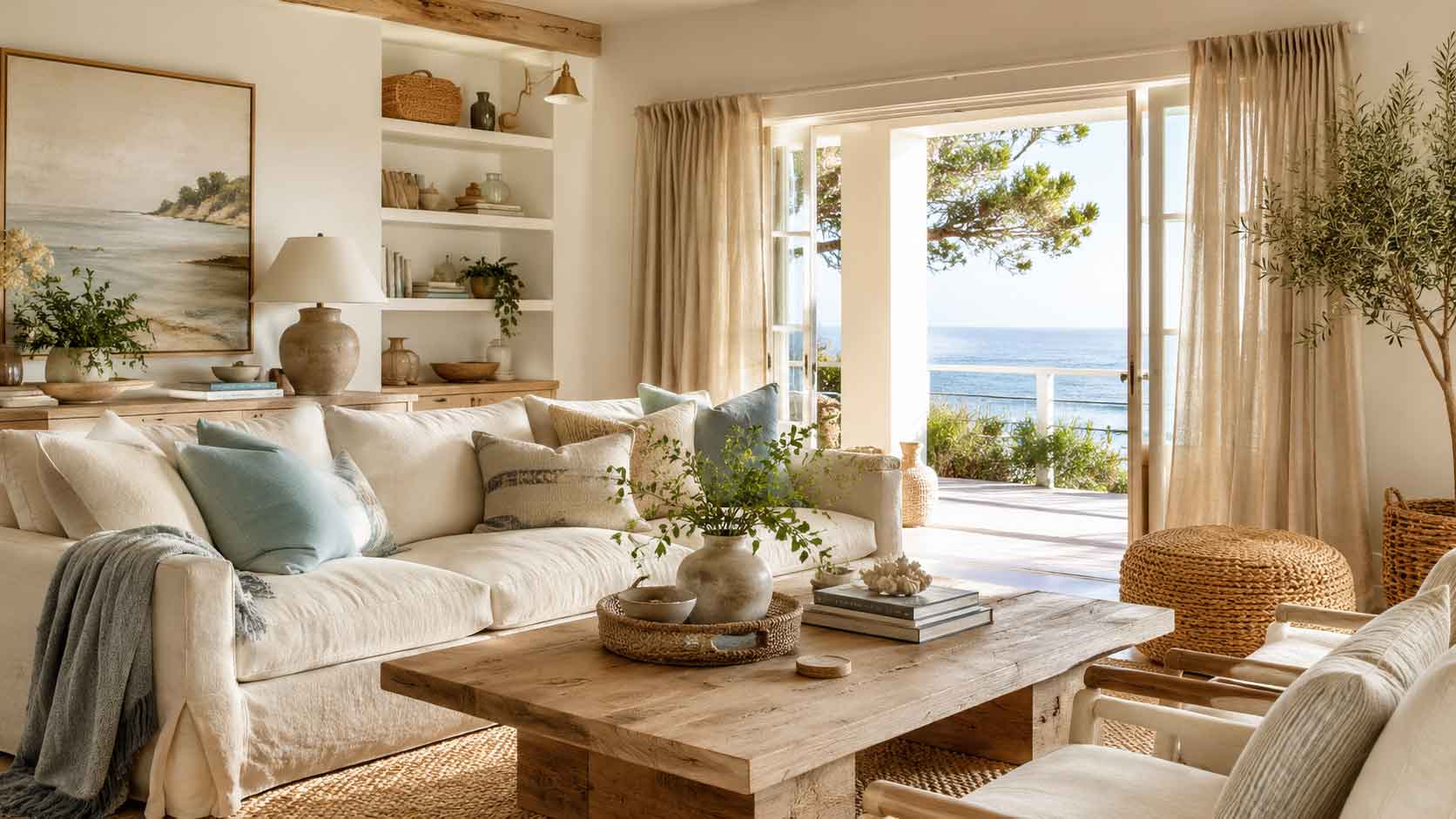
A coastal home should feel warm, layered, and inviting—not stark, cold, or overly white. The most beautiful coastal interiors use light carefully, but they also rely on texture, undertones, wood tones, and softness to create a home that feels livable as well as bright.
Many people want a coastal home to feel airy and calm, so they instinctively reach for white walls, pale fabrics, and light finishes everywhere. The intention makes sense, but the result can sometimes feel flatter or colder than expected. A home can be bright without feeling stark, and coastal interiors are usually strongest when they balance lightness with warmth.
At Bella Coze Home, we believe coastal interiors should feel connected to place and easy to live in. Through our interior decorating services, we help homeowners create spaces that feel welcoming, refined, and naturally layered from the start.
Why Coastal Homes Often End Up Feeling Too White
Coastal design is often associated with brightness, softness, and natural light. But somewhere along the way, that idea can get reduced to one simplified version: white everything. White walls, white upholstery, white kitchens, white bedding, and very little contrast. While that can photograph cleanly, it does not always create the warmth people actually want to live with every day.
The issue is usually not white itself. It is the lack of depth around it. When a room relies too heavily on one light tone without enough texture, undertone variation, or grounding elements, the space can start to feel unfinished or sterile instead of calm and elevated.
Start With Warm Whites, Not Stark Whites
If you want a coastal home to feel lighter without feeling cold, the first place to look is undertone. Not all whites are the same. Cooler whites can make a home feel crisp, but they can also make it feel harder or flatter depending on the light. Warmer whites usually create a softer and more welcoming effect.
In many coastal homes, the most successful whites have a creamy, sandy, or slightly softened character to them. They still reflect light beautifully, but they do not feel clinical. The goal is brightness with warmth, not brightness at the expense of comfort.
Use Texture to Create Warmth
One of the best ways to keep a light coastal home from feeling too white is to rely more heavily on texture. Linen, wood, woven materials, plaster, natural fibers, soft rugs, tailored upholstery, and matte finishes all help a room feel more dimensional.
Texture gives white and neutral rooms somewhere to go. It creates shadow, variation, and softness without requiring stronger color or heavier finishes. This is also one reason elevated coastal homes feel so much more resolved than themed ones.
Bring in Wood and Natural Materials
A coastal home often feels warmer the moment natural wood enters the picture. Wood tones add grounding and visual relief to lighter palettes, especially when the rest of the home leans airy and neutral. The same is true of stone, woven textures, aged brass, leather, and other natural materials that create subtle contrast.
These elements keep the home from feeling one-note. They also help the space feel more connected to the landscape, which is often what makes coastal interiors feel authentic in the first place.
Layer Neutrals Instead of Using One Shade Everywhere
A warm coastal home usually includes many neutrals, but not all in the same tone. Layering warm whites, sandy beige, driftwood brown, pale taupe, muted blue, soft green, and natural textures creates a room that feels quiet without feeling flat.
What makes a room feel cold is often not the absence of bold color, but the absence of enough variation. Layered neutrals create movement and atmosphere. A single white tone repeated too literally can make the room feel thinner than intended.
Use Coastal Color More Softly
Color can help warm up a coastal home, but it works best when it feels softened and natural. Muted blues, pale greens, weathered tones, sand-inspired neutrals, and sun-washed accents usually feel more elevated than anything overly bright or highly saturated.
The strongest coastal palettes tend to feel drawn from the landscape rather than added on top of it. That is also what makes coastal luxury interior design feel so refined. It uses color and light with more restraint and more depth.
Keep the Home Light, But Ground the Rooms
Warm coastal interiors are not about making the home darker. They are about giving each room enough grounding so the lightness feels intentional. That might mean a wood coffee table, woven dining chairs, darker metal accents, antique wood pieces, layered rugs, or drapery with more softness and weight.
These details create visual anchors. Without them, even a beautiful room can start to feel as though it is floating without enough substance underneath it.
Lighting Matters More Than People Realize
A coastal home can feel too white simply because the lighting is not helping. If the room depends on cool bulbs, harsh overhead fixtures, or flat lighting, even warm finishes can lose their softness. Good lighting adds dimension and makes lighter palettes feel more welcoming.
Lamps, layered lighting, softer shades, and warmer light temperature all help a room feel calmer and more complete. The goal is to support the mood of the room, not flatten it.
Warmth and Coastal Style Can Still Feel Southern
In many homes, especially in the South, the most inviting coastal interiors are not minimal at all. They often borrow some of the warmth and hospitality associated with Southern style interior design while still keeping the overall look lighter and more connected to the coast.
That mix can feel especially natural in coastal markets like Hilton Head, where homes often benefit from both softness and depth rather than a sharper, all-white look.
What Makes a Coastal Home Feel Cold Instead of Warm?
There are a few common reasons coastal homes start to feel too white or too stark:
- using one bright white tone everywhere
- not enough contrast in materials or undertones
- very little wood, texture, or natural variation
- cool lighting that flattens the space
- rooms that feel airy but not grounded
- decor choices that feel clean but not layered
Usually, the answer is not adding more color at random. It is making better foundational choices so the room feels softer, richer, and more complete.
Final Thoughts
To make a coastal home feel warm, not too white, focus on undertones, texture, natural materials, and grounded contrast. The goal is not to give up lightness. It is to make that lightness feel lived in, layered, and welcoming rather than stark or sterile.
The most successful coastal interiors feel calm without feeling cold. They use warm whites, softer materials, natural texture, and thoughtful contrast to create rooms that feel bright enough to breathe and rich enough to truly live in.
Create a coastal home that feels bright, warm, and beautifully lived in.
Bella Coze Home helps homeowners design coastal interiors that feel layered, welcoming, and naturally refined. Explore our interior decorating services or schedule a consultation to discuss your home.
Sorry, the comment form is closed at this time.