


20 Apr What Out-of-State Homeowners Get Wrong About Designing a Second Home in Hilton Head
Part of our Second Home Design insights — focused on how to design and manage second homes the right way.
Designing a second home in Hilton Head doesn’t fail because of bad ideas.
It fails because no one is managing the full process.
Where Second Home Projects Break Down
- Underestimating coordination — Managing builders, designers, and vendors remotely quickly becomes fragmented
- Making decisions without context — Without being on-site, materials, layouts, and finishes rarely come together cohesively
- Assuming timelines will hold — Delays happen when no one is actively managing sequencing and execution
- Treating design and execution separately — Most projects fail when no one owns the full outcome
Most homeowners try to manage design, vendors, and decisions separately—without a single point of control.
Most homeowners don’t recognize these problems until they’re deep into the project—when timelines slip, costs increase, and fixing mistakes becomes expensive.
Why Hilton Head Adds Another Layer of Complexity
Hilton Head isn’t just another location—it comes with strict architectural standards, HOA approvals, and community-specific requirements.
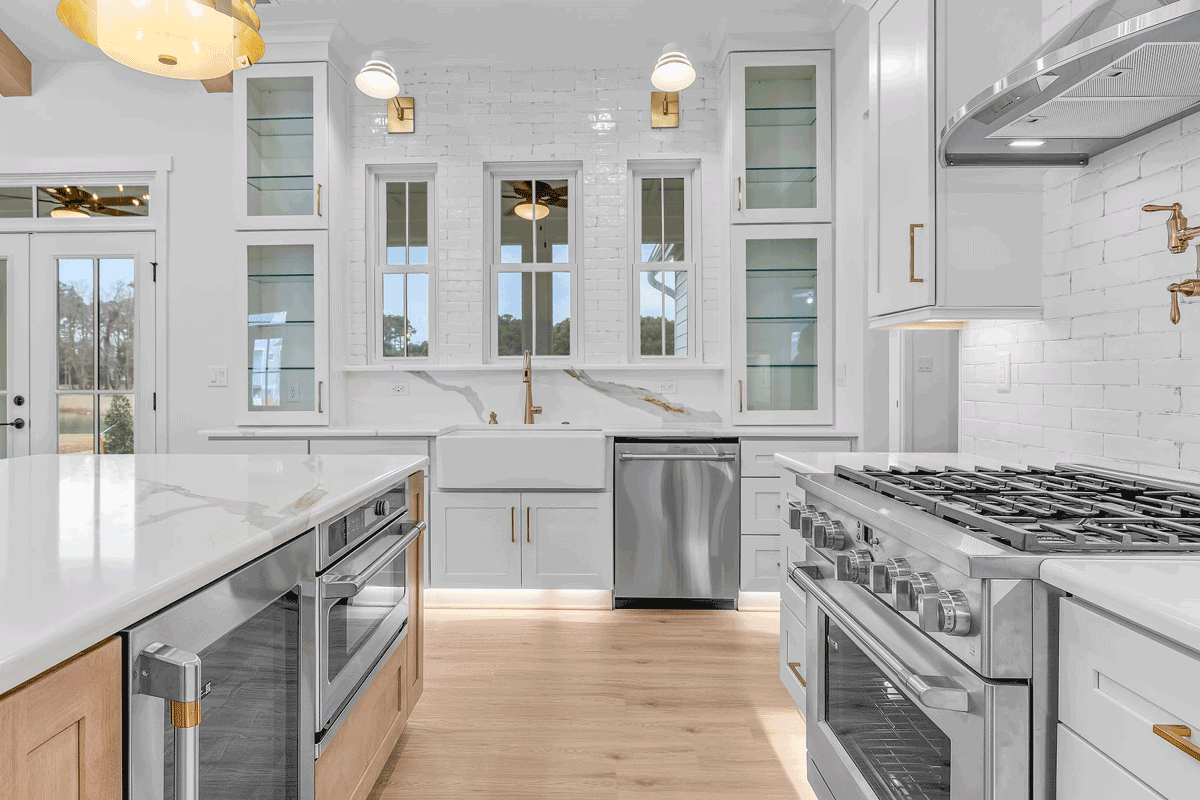
For example, we recently completed a full renovation in Sea Pines overlooking the RBC Heritage 18th hole—managing approvals, vendors, and installation entirely remotely.
Communities like Sea Pines, Wexford, and Palmetto Dunes each have their own processes—and missing details can delay projects significantly.
For out-of-state homeowners, this isn’t just inconvenient—it introduces risk at every stage of the project.
What Happens When You Try to Manage It Yourself
- Decisions get delayed or revisited multiple times
- Vendors operate without alignment
- Costs increase due to rework and inefficiencies
- The final home feels incomplete or inconsistent
These issues don’t show up all at once—they compound over time until the project becomes harder to control.
Most second home projects don’t need better ideas—they need a structured system to manage execution from start to finish.
→ See how the full design process worksThe Shift: From Design Project to Managed Outcome
The homeowners who get this right don’t approach it as a series of decisions—they approach it as a managed system.
Instead of coordinating design, vendors, and timelines independently, everything is aligned from the beginning and managed through a single process.
That’s what turns a fragmented experience into a home that’s fully complete the moment you arrive.Most homeowners think the project ends when the design is complete.
In reality, that’s where problems begin—because maintaining that level of execution requires ongoing coordination.
That’s why many second homeowners move into home stewardship , where vendors, maintenance, and decisions are managed as a complete system.
A Better Way to Approach It
Most second-home projects don’t fail because of bad decisions—they fail because no one is managing the full process.
When design, coordination, and execution are handled together, everything changes:
- Decisions happen faster
- Vendors stay aligned
- Timelines hold
- The final result feels intentional and complete
Most homeowners skip this step—and that’s where projects start to fail.
If you want a home in Hilton Head that’s fully designed, coordinated, and ready when you arrive, the difference is having a structured process that manages everything from start to finish.
→ Explore Our Second Home Design ProcessAlready completed your home? See how we manage it long-term →
Part 1 of 3 — Second Home Design in Hilton Head
Next: How the process should actually work
→ Step-by-Step Design Process
Sorry, the comment form is closed at this time.