


11 May How to Make a Coastal Home Feel Elevated, Not Themed
How to Make a Coastal Home Feel Elevated, Not Themed
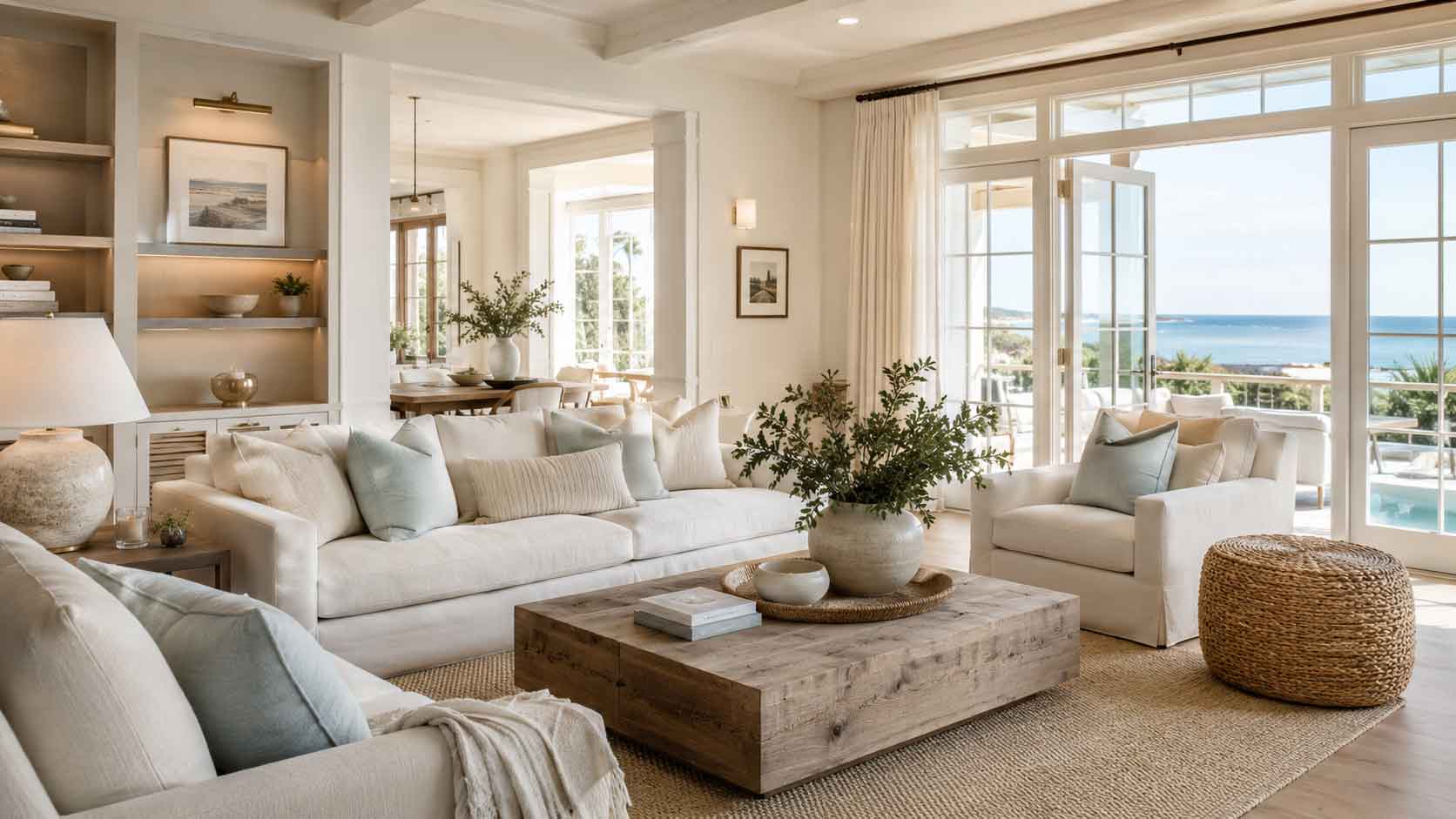
A coastal home feels elevated when it is layered, restrained, and connected to its setting without relying on obvious beach decor. The most beautiful coastal interiors feel calm, refined, and natural—not overly themed or overly styled.
Creating a coastal home that feels sophisticated is often less about adding more and more about choosing better. Many people want a home that reflects the coast, but the result can quickly start to feel too literal. Shell motifs, themed accessories, overly bright palettes, and generic decor choices can make a home feel more decorative than designed.
At Bella Coze Home, we believe coastal interiors should feel grounded in place and easy to live in. Through our interior decorating services, we help homeowners create homes that feel refined, welcoming, and naturally connected to their surroundings.
Start With the Feeling, Not the Theme
The easiest way to make a coastal home feel too themed is to begin with decor instead of atmosphere. Elevated coastal design usually starts with a mood: light, ease, warmth, softness, and a strong connection to the environment. That feeling should guide the materials, furnishings, and palette long before any decorative details are considered.
When the goal is atmosphere rather than theme, the home feels more timeless. It reads as thoughtful and grounded rather than obvious.
Let Materials Carry the Design
One of the clearest differences between a themed coastal interior and an elevated one is the role of materials. Refined coastal homes rely on natural wood tones, linen, plaster, stone, woven textures, soft upholstery, and subtle finishes to create depth.
That is what makes the room feel rich without clutter. When materials are doing the work, the home needs fewer decorative signals to communicate the setting.
Use Coastal Color With More Restraint
Coastal palettes work best when they feel soft, layered, and a little weathered rather than bright or overly obvious. Warm whites, sandy neutrals, driftwood tones, muted blues, pale greens, and natural texture all help create a coastal mood without making the room feel staged.
The goal is not to erase color. It is to use color in a way that feels natural to the landscape. A quieter palette usually creates a more elevated effect than one that depends on contrast or novelty.
Avoid Decorative Shortcuts
Many coastal homes start to feel generic because they rely on decorative shorthand. Obvious beach signs, rope accents, shell motifs, overly literal artwork, and repeated nautical references can flatten the design quickly.
These elements are not always wrong in small doses, but when they become the main way the room expresses place, the home tends to feel more themed than refined. Coastal design is usually stronger when the setting is felt rather than announced.
Layer Texture Instead of Accessories
If you want a coastal home to feel more elevated, focus on texture before accessories. A room with beautiful drapery, natural fibers, soft upholstery, layered rugs, and warm lighting often feels far more finished than a room filled with decor objects.
This is one reason coastal luxury interior design feels so distinct. It depends on depth, restraint, and better foundational choices rather than themed visual cues.
Keep the Architecture in the Conversation
Elevated coastal design should always respond to the home itself. Ceiling height, trim, windows, flooring, sightlines, and natural light all shape how coastal influence should show up in a room. A home in Hilton Head or another coastal setting should reflect that environment, but it should still feel appropriate to its architecture.
When the interior ignores the architecture, the result can feel disconnected no matter how nice the furnishings are. The best coastal homes feel like the design belongs specifically to that property.
Mix Comfort With Refinement
Coastal homes should feel easy, but easy should not mean casual to the point of feeling unfinished. Comfortable seating, layered bedrooms, thoughtful lighting, and practical flow all matter—but so do scale, proportion, and finish quality.
The most elevated homes balance comfort and refinement. They feel welcoming the moment you walk in, but also resolved enough that the design feels intentional from room to room.
Use Collected Pieces to Add Depth
A home that feels too perfect or too purchased all at once can quickly lose character. Elevated coastal interiors often benefit from a few collected pieces—vintage wood tones, interesting lighting, art with softness and scale, and objects that feel personal without becoming clutter.
These pieces help the home feel layered rather than generic. The goal is not to make the room busy. It is to give it enough variation and warmth to feel lived in and distinctive.
What Makes a Coastal Home Feel Too Themed?
There are a few common choices that can make a coastal home feel less sophisticated:
- too many literal beach references
- bright or overly obvious coastal color palettes
- generic furniture with little material depth
- rooms styled with accessories instead of texture
- decor that feels disconnected from the home’s architecture
- spaces that feel staged rather than lived in
Usually, the issue is not that the room is coastal. It is that the coastal references are doing too much of the work.
Why This Matters in Second Homes and Coastal Properties
In second homes especially, people often want a home that immediately feels different from daily life. That can make themed decor tempting, but the strongest result usually comes from a calmer, more lasting approach. A second home should feel relaxed and tied to place, but it should also feel complete enough to enjoy for years.
Our approach to second home interior design focuses on exactly that balance: a home that feels restorative, elevated, and easy to live in without becoming generic or trend-heavy.
Coastal Homes Can Still Feel Warm and Southern
Not every coastal home should feel minimalist or cool-toned. In many homes, especially in the South, the best result is a blend of coastal softness and more traditional warmth. That is one reason Southern style interior design often overlaps naturally with elevated coastal interiors.
Both styles value hospitality, layered materials, natural light, and spaces that feel welcoming rather than rigid. The difference is in the emphasis, not the philosophy.
Final Thoughts
To make a coastal home feel elevated, focus on materials, mood, texture, and restraint rather than theme. The most beautiful coastal interiors feel connected to the environment without leaning on decorative clichés to prove it.
When done well, the result is a home that feels calm, layered, and timeless—refined enough to feel special, but relaxed enough to truly live in.
Create a coastal home that feels refined, welcoming, and beautifully lived in.
Bella Coze Home helps homeowners design layered coastal interiors that feel elevated without becoming themed. Explore our interior decorating services or schedule a consultation to discuss your home.
Frequently Asked Questions
How do you make a coastal home feel elevated?
Focus on materials, texture, light, palette, and restraint. Elevated coastal interiors feel layered and connected to place without relying on obvious beach-themed decor.
What makes a coastal home feel too themed?
Too many literal beach references, overly bright palettes, generic decor, and heavy reliance on accessories can make a coastal home feel more themed than refined.
Can a coastal home still feel warm and inviting?
Yes. The best coastal homes combine softness and natural light with warmth, texture, and comfort. A refined coastal home should feel welcoming, not cold or stark.
What colors work best in an elevated coastal home?
Warm whites, sandy neutrals, driftwood tones, muted blues, pale greens, and layered natural textures usually create the most timeless and elevated coastal palette.
Is elevated coastal design good for second homes?
Yes. Elevated coastal design works especially well in second homes because it creates a home that feels relaxed, restorative, and connected to the setting without becoming overly decorative.
Sorry, the comment form is closed at this time.