


09 May How to Design a Luxury Short-Term Rental Without Looking Generic
How to Design a Luxury Short-Term Rental Without Looking Generic
Luxury short-term rental design is about more than expensive furniture or polished listing photos. The best properties feel memorable, refined, and easy to enjoy—never generic, over-themed, or staged without purpose.
Designing a luxury short-term rental requires a different mindset than designing a personal home. The space needs to appeal to guests, stand out online, hold up over time, and still feel warm, intentional, and elevated in person.
At Bella Coze Home, we believe the most successful rentals feel collected rather than formulaic. Through our interior decorating services, we help homeowners create interiors that are beautiful, livable, and tailored to the home rather than copied from every other listing in the market.
Why So Many Luxury Rentals Still Feel Generic
Many short-term rentals miss the mark because they rely on the same visual shortcuts: oversized wall art, trend-heavy decor, neutral furniture with little character, and styling choices that look fine in photos but forgettable in real life.
The result is a property that may appear “nice,” but not memorable. And in a competitive market, memorable matters. Guests may not use the word design, but they quickly recognize when a space feels generic, impersonal, or interchangeable.
What Makes a Luxury Rental Feel Elevated?
A luxury short-term rental should feel polished, comfortable, and distinct. It should reflect the location, support the guest experience, and create a strong enough impression that people remember it after they leave.
That usually comes down to a few principles done well:
- a clear point of view
- better materials and layered textures
- comfort that feels intentional, not basic
- rooms that photograph beautifully but also function well
- details that feel tailored to the property
Start With a Design Point of View
The fastest way for a rental to feel generic is to choose everything by default. Luxury interiors need direction. That does not mean every room has to feel dramatic, but the home should have a clear identity.
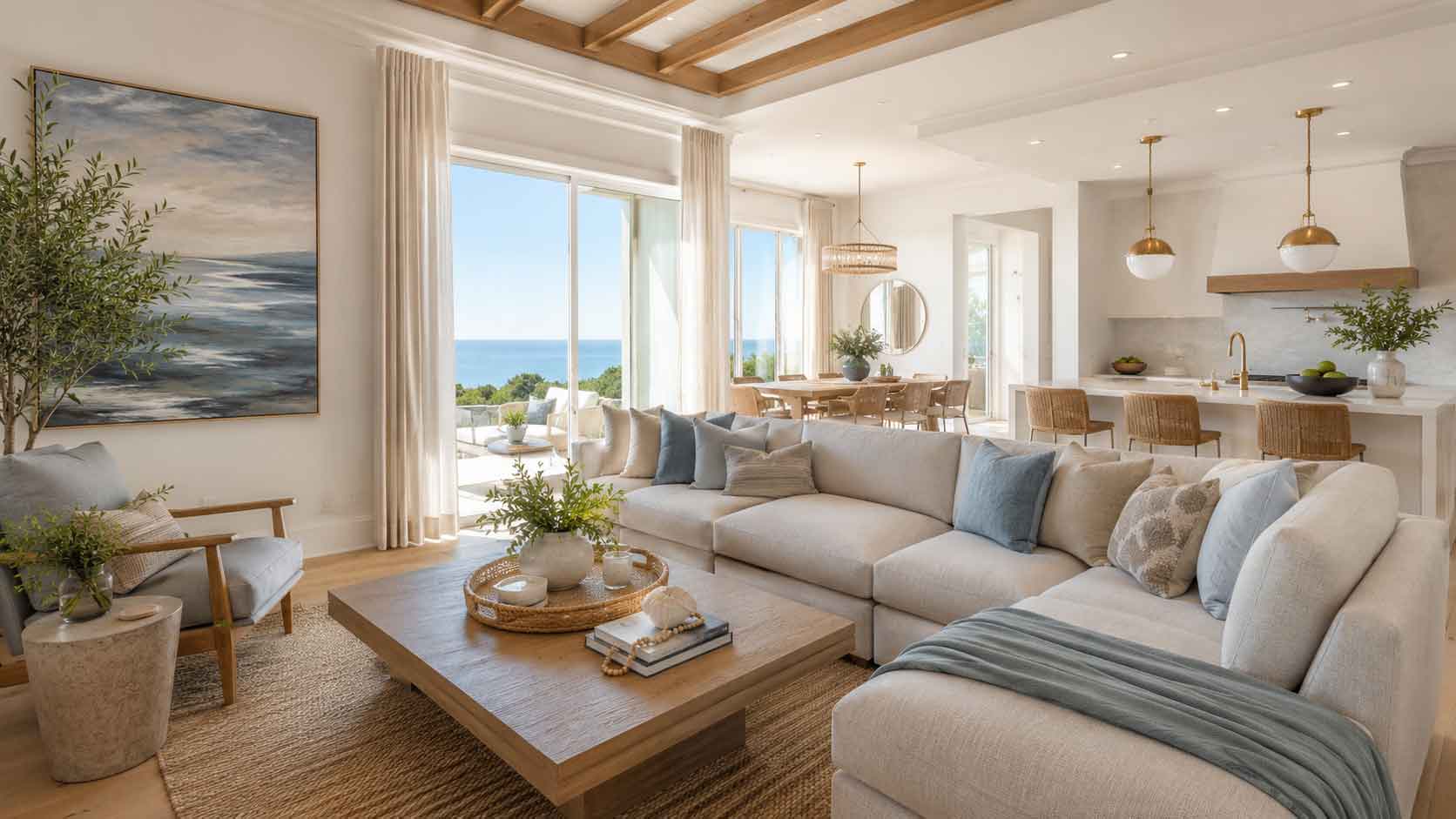
In a coastal market like Hilton Head, that might mean a relaxed, layered palette with natural materials, tailored upholstery, and subtle references to the landscape rather than overt beach decor. The goal is to create a space with character, not a collection of generic vacation-house clichés.
Avoid Over-Theming the Home
One of the biggest mistakes in rental design is leaning too hard on a theme. Guests do not need shell prints in every room or obvious decorative signals reminding them they are at the beach. In fact, those choices often make a property feel less elevated, not more.
Luxury design works best when the connection to the location is subtle. Texture, light, materials, shape, and color can all reflect the setting without turning the home into a themed set.
Use Better Materials, Not Just More Decor
High-end rentals usually feel luxurious because the materials are doing the work. Upholstery feels better. Rugs have more depth. Lighting has warmth and scale. Wood tones feel natural. Hardware, textiles, and finishes create richness without requiring visual clutter.
When a property relies too heavily on accessories to feel finished, it often ends up looking styled rather than designed. Fewer, better choices usually create a stronger result.
Focus on Comfort That Feels Considered
Guests may first book a property because it looks beautiful, but they remember how it felt to stay there. Luxury is not just appearance. It is the ease of the layout, the softness of the seating, the quality of the bedding, the lighting by the bed, and the small details that make the home feel intuitive to use.
Comfort should never feel accidental. The most successful rentals are designed so that living rooms invite people to gather, bedrooms feel restful, and every key space supports both beauty and function.
Make the Home Feel Collected, Not Staged
Generic rentals often look like everything arrived in one shopping cart. A more elevated property feels layered and intentional. That can come from mixing materials, balancing old and new elements, using art with personality, and incorporating a few details that make the home feel less formulaic.
This does not require clutter or highly personal decor. It simply means the home should feel designed for this property, in this location, for this kind of stay.
Let the Location Influence the Design
The best luxury rentals feel connected to where they are. A second home in a coastal setting should acknowledge that setting in a restrained and sophisticated way. Soft palettes, natural fibers, warm woods, layered neutrals, and a strong indoor-outdoor relationship all help the home feel grounded in place.
That is especially true for owners furnishing destination properties or second homes. Our work in second home interior design focuses on creating homes that feel complete, personal, and easy to maintain while still delivering a memorable guest experience. For homeowners making foundational finish and furnishing decisions early, thoughtful new home selections can also help shape a more cohesive and elevated result from the beginning.
Design for Photos, But Not Only for Photos
Listing images matter, but a rental that looks beautiful in photos and disappoints in person will eventually feel it in reviews. Luxury rentals need both visual impact and real comfort.
That means balancing photogenic moments with practical decisions like scale, circulation, storage, lighting, durability, and seating that actually works for the number of guests the home is meant to host.
If you want a broader look at the performance side, read our guide on interior design for short-term rentals and what actually increases bookings.
Where Luxury Short-Term Rentals Usually Go Wrong
Even high-budget rentals can feel generic when they make the wrong design choices. Common issues include:
- too much sameness from room to room
- bland furniture with little texture or contrast
- decor that follows trends too closely
- overuse of obvious coastal or vacation motifs
- spaces that look good online but feel flat in person
- too many accessories and not enough substance
Luxury should feel effortless, not overworked. The homes that stand out usually have restraint, warmth, and a clear sense of identity.
For a closer look at the design problems that often show up later in the guest experience, read our guide on vacation rental design mistakes that hurt guest reviews.
Final Thoughts
A luxury short-term rental should feel memorable because it is well designed, not because it is overdecorated. The best homes balance comfort, character, quality, and a strong sense of place. They feel elevated without becoming precious and distinctive without becoming overly themed.
When done well, the result is a rental that photographs beautifully, feels exceptional in person, and leaves guests with the impression that every detail was considered.
Create a short-term rental that feels elevated, memorable, and beautifully resolved.
Bella Coze Home helps homeowners design second homes and destination properties that feel refined, livable, and complete. Explore our interior decorating services or schedule a consultation to discuss your property.
Frequently Asked Questions
What makes a short-term rental feel luxurious?
A luxury short-term rental feels comfortable, cohesive, and thoughtfully designed. Better materials, layered textures, refined lighting, quality bedding, and a clear design point of view all contribute to a more elevated experience.
Why do so many vacation rentals look generic?
Many rentals rely on the same furniture, wall art, and trend-based styling choices. Without a clear design perspective, the space can feel interchangeable rather than memorable.
Should a luxury rental follow a strong theme?
No. The best luxury rentals reflect their location subtly through materials, color, texture, and mood rather than obvious themed decor.
How do you make a rental feel high-end without overdecorating?
Focus on better materials, strong lighting, thoughtful furniture scale, layered textiles, and a few distinctive details. A restrained, well-resolved interior usually feels more luxurious than one filled with decor.
Can a short-term rental feel personal without feeling too specific?
Yes. A home can feel warm, tailored, and distinctive without being overly personal. The goal is to create character and depth while still appealing to guests.
Sorry, the comment form is closed at this time.