


10 May Vacation Rental Design Mistakes That Hurt Guest Reviews
Vacation Rental Design Mistakes That Hurt Guest Reviews
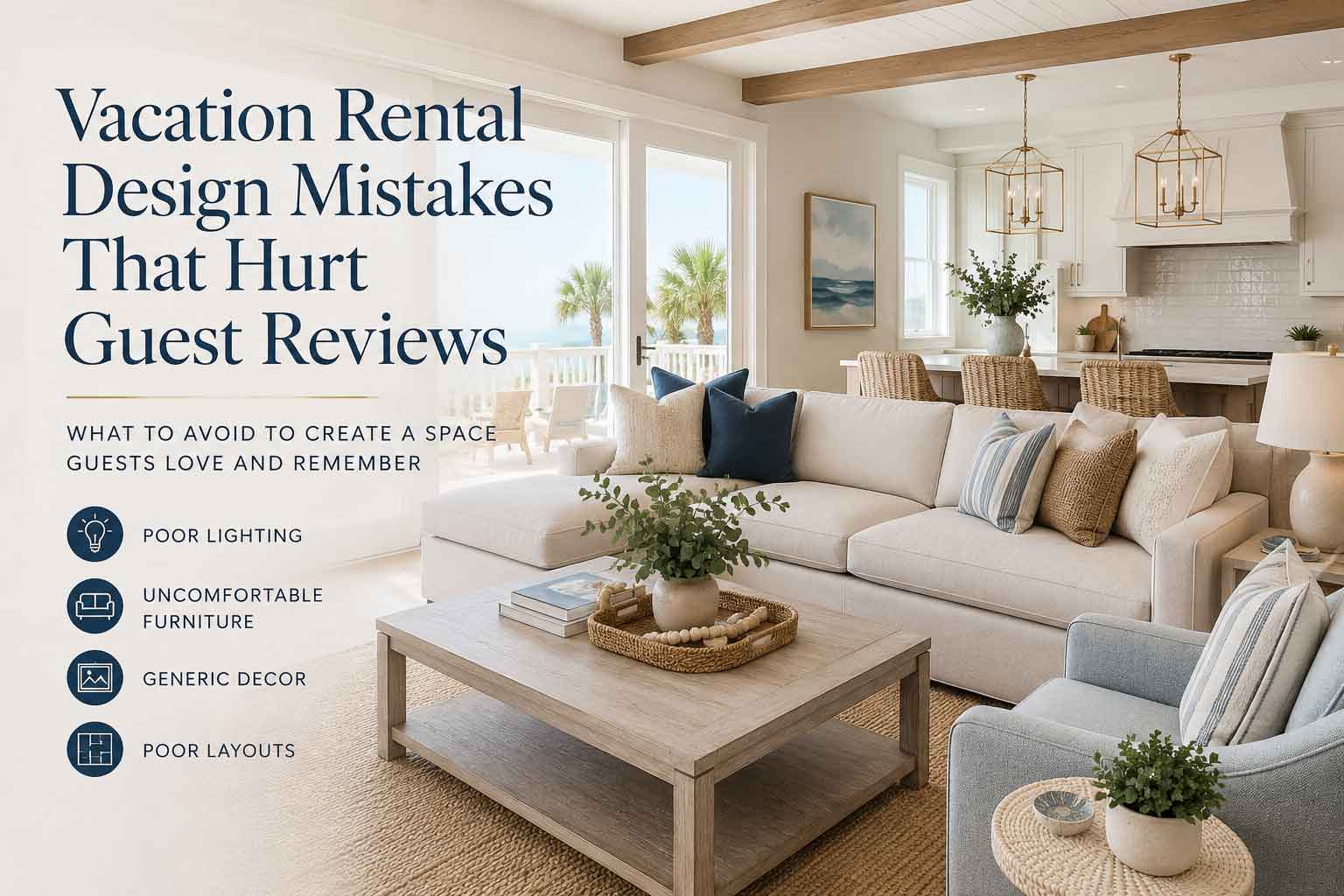
Vacation rental design mistakes often show up in guest reviews long before owners realize what is going wrong. Poor lighting, uncomfortable furniture, weak layouts, and generic interiors can all make a property feel less enjoyable, less memorable, and less worth recommending.
Most guests will not write a review saying the upholstery scale was off or the room lacked visual balance. But they will say the home felt dark, awkward, uncomfortable, underwhelming, or not as nice as expected. That is where design starts to affect performance.
At Bella Coze Home, we believe strong rental design is about more than making a property look good online. Through our interior decorating services, we help homeowners create spaces that support better experiences from the first impression to the final review.
Why Design Has Such a Big Impact on Reviews
Guest reviews are shaped by expectation versus reality. Listing photos may get the booking, but the lived experience determines whether a guest feels delighted, disappointed, or somewhere in between.
Design affects that experience in subtle but powerful ways. It influences how well people sleep, how comfortable they feel, how easy the home is to use, and whether the property feels thoughtful or forgettable.
1. Poor Lighting
Bad lighting is one of the fastest ways to make a rental feel less inviting. Dark corners, weak bedside lighting, harsh overhead fixtures, or a lack of layered lighting can make even a nice home feel uncomfortable and underwhelming.
Guests notice lighting in living spaces, bedrooms, bathrooms, and entry areas. A well-designed home needs ambient light, task lighting, and enough warmth to make the space feel welcoming day and night.
2. Furniture That Looks Good but Feels Uncomfortable
One of the most common rental mistakes is prioritizing appearance over actual comfort. A sofa may photograph well but feel stiff. Dining chairs may look stylish but become uncomfortable quickly. Beds may seem attractive in photos but fall short where it matters most.
Guests remember how a space feels to use. If the seating is awkward, the mattresses are weak, or the layout does not support how people gather and relax, the review often reflects it.
3. Bedrooms That Feel Sparse or Neglected
Bedrooms carry more weight than many owners realize. A beautiful living room cannot fully make up for a bedroom that feels flat, poorly lit, or unfinished.
Bedrooms are often where design problems become most noticeable because guests experience them for hours at a time, not just in passing.
Common issues include:
- missing or mismatched nightstands
- insufficient bedside lighting
- poor-quality bedding
- rooms that feel too empty or overly crowded
- a lack of warmth, softness, or practical function
Bedrooms should feel finished, restful, and intentionally designed rather than treated like secondary spaces. Even simple upgrades like better lamps, more substantial bedding, softer textures, and balanced furniture placement can make the room feel more complete. When bedrooms feel calm and comfortable, guests tend to view the entire home more favorably.
If guests do not sleep well or feel comfortable in the room, the home will feel less premium overall.
4. Generic, Forgettable Decor
Generic decor does not always trigger obvious complaints, but it often weakens the overall impression. Guests may not say a rental looked generic, but they will remember whether it felt special, elevated, or interchangeable with every other listing.
Homes that rely on safe, generic styling often struggle to create any real emotional impression. Better rentals feel more thoughtful, more layered, and more connected to the property and location.
If you want to avoid that problem, read our guide on how to design a luxury short-term rental without looking generic.
5. Layouts That Do Not Match How Guests Actually Use the Home
Guests move through a rental differently than owners do. They need places to set luggage, charge devices, get ready, gather, eat, and relax without confusion or inconvenience.
Design mistakes in layout often include:
- not enough seating for the guest count
- poor furniture placement
- missing surfaces near beds and sofas
- entry areas with no drop zone
- outdoor spaces that are underfurnished or ignored
A strong rental layout should feel obvious the moment guests arrive. They should know where to sit, where to put bags, where to charge devices, and how to comfortably gather as a group. When those basics are missing, the home may still look attractive, but it feels less convenient and less enjoyable during the stay.
When the layout feels awkward, the home feels harder to enjoy.
6. Over-Themed Spaces
Vacation rentals often go too far with the obvious theme. Shell prints, overly literal beach decor, repetitive motifs, and themed accessories can make the property feel less elevated, not more.
The strongest rentals reflect the setting with restraint. In a place like Hilton Head, the design should feel connected to the coast through materials, palette, light, and mood rather than through decor that feels expected.
7. Too Much Styling, Not Enough Function
Some rentals are styled heavily for photos but fall short in real use. Decorative objects fill surfaces, but guests have nowhere to put their things. Rooms look polished, but the lighting, storage, and usability are lacking.
Good design should support real life, even in a short-term stay. The most successful homes balance visual appeal with comfort, durability, and ease of use.
This is especially common in homes designed mainly for listing photos. A room may appear polished online, but if guests have nowhere to place a drink, unpack a suitcase, or comfortably use the space, the styling starts to work against the experience. The best rentals feel edited and elevated, but never impractical.
8. Ignoring Durability
Design decisions that look good on day one but do not hold up can quickly hurt the guest experience. Worn fabrics, unstable furniture, low-quality rugs, and easily damaged finishes all make a property feel less cared for over time.
Durability does not mean sacrificing beauty. It means selecting materials and furnishings that continue to look polished even with repeated use.
9. A Home That Feels Disconnected From Its Market
A vacation rental should reflect the type of stay guests expect. If the design feels too cold, too generic, too formal, or disconnected from the location, the home may feel less inviting even if it is technically well furnished.
Destination properties and second homes often benefit from a more tailored approach. Our work in second home interior design focuses on creating homes that feel complete, livable, and aligned with both the location and the way the property will actually be used.
10. Not Designing for the Full Guest Experience
The strongest reviews often come from homes where everything feels easier than expected. Guests notice when there is enough seating, enough lighting, comfortable bedding, durable finishes, and a layout that makes sense. They also notice when those things are missing.
Design should support the full stay, not just the listing photos. If you want a broader look at what helps a rental perform well, read our guide on interior design for short-term rentals and what actually increases bookings.
That is often the difference between a stay that feels fine and one that feels genuinely well considered. The strongest vacation rentals are designed from the guest’s point of view, with attention to both appearance and usability. When the full experience is supported well, reviews tend to sound more enthusiastic, specific, and positive.
Final Thoughts
Vacation rental design mistakes usually do not show up as “design complaints.” They show up as lower comfort, weaker impressions, more muted reviews, and less enthusiasm about the stay overall.
The best rentals feel easy, warm, well-planned, and memorable. When a home balances comfort, durability, layout, and thoughtful design, guests feel the difference immediately—and their reviews usually reflect it.
Design a vacation rental guests enjoy staying in and want to review well.
Bella Coze Home helps homeowners create refined, guest-ready interiors for second homes and destination properties. Explore our interior decorating services or schedule a consultation to discuss your home.
Frequently Asked Questions
What design mistakes hurt vacation rental reviews the most?
Poor lighting, uncomfortable furniture, weak bedding, awkward layouts, generic decor, and a lack of practical function are some of the most common design problems that affect guest experience and reviews.
Do guests really notice interior design in a vacation rental?
Yes. Guests may not describe it in design terms, but they quickly notice how the home feels. Comfort, lighting, layout, and overall atmosphere all influence reviews.
Can a rental look beautiful in photos and still get weaker reviews?
Absolutely. A home may photograph well but still disappoint in person if the furniture is uncomfortable, the layout is awkward, or the design prioritizes styling over function.
How do you make a vacation rental feel less generic?
Use better materials, create a clear design point of view, avoid over-theming, and make the home feel connected to its location in a subtle, elevated way.
Should vacation rental design be different from second home design?
Often yes. A second home that also serves guests needs to balance beauty, durability, ease of maintenance, and broad guest appeal while still feeling warm and personal.
Sorry, the comment form is closed at this time.